

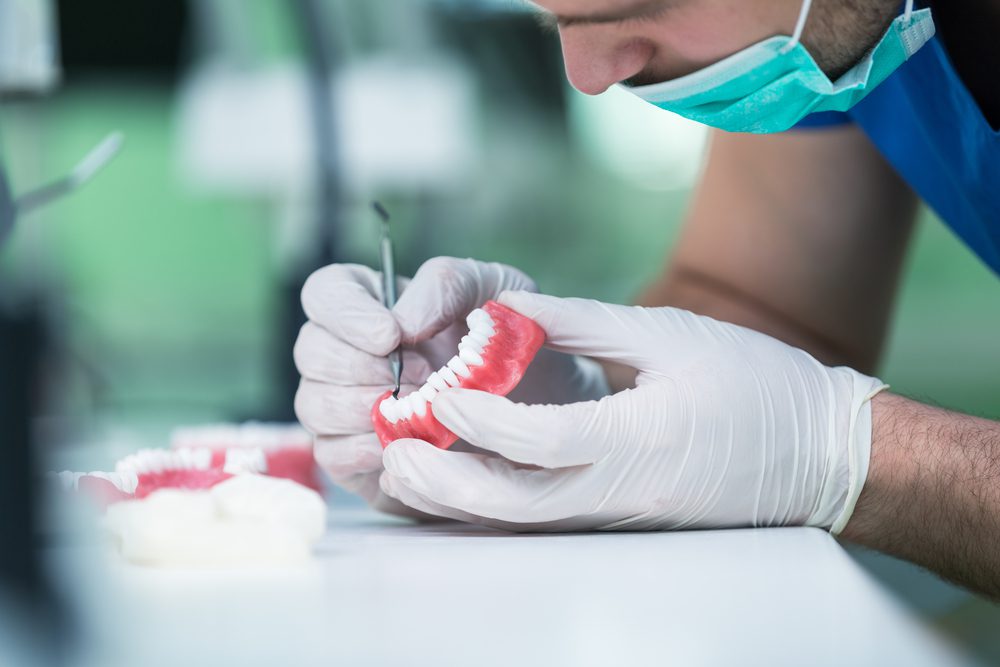
As time goes on, your mouth changes, and so should your dentures. What once felt snug may gradually become loose, uncomfortable, or even harmful. Below, we walk you through why this happens, how relining solves the problem, and what symptoms to watch for, especially if you’re in Kemptville, Lanark, or nearby areas.
1 | Why Dentures Loosen Over Time: Bone & Tissue Changes
Bone Resorption & Gum Shrinkage
When natural teeth are removed or lost, the underlying jawbone gradually “resorbs” (shrinks) because it no longer receives stimulation. This process continues slowly over time, changing the shape of your ridge where dentures rest.
Tissues in your mouth (gums, mucosa) also adapt and may flatten or atrophy, further altering how your denture fits.
Everyday Wear & Changes
- Denture bases may wear or flatten in high-pressure areas
- Minor changes in weight (loss or gain) can affect facial tissues and bone contour
- Regular chewing and stress unevenly applied over years can gradually change fitting surfaces
These factors can cause micro-gaps, pressure points, and shifting that accumulate over months or years until the fit becomes noticeably poor.
2 | Common Symptoms That Signal a Reline Is Needed
You should consider a reline when you notice one or more of these signs:
- Loose or shifting dentures when talking, chewing, or laughing
- Increased food particles catching under the denture
- New or worsening soreness, red spots, or ulcerations on your gums
- Difficulty chewing or a feeling that your bite is “off”
- Heavy reliance on denture adhesive to keep things in place
- Uneven pressure—parts of the denture “tight” and other parts loose
If you’ve started increasing adhesive or feel your dentures slipping, don’t wait until damage worsens.
3 | What Does Relining Do — & How?
What a Reline Is
Relining involves resurfacing the tissue-contact side, the underside—of your existing denture to more accurately match your current gum and jaw ridges. It adds new base material rather than replacing the entire denture.
Relines improve fit, reduce sore spots, and restore better retention without changing how your denture looks or its teeth.
Types of Relines
- Soft (cushioned) relines: A more forgiving layer of material—good for sensitive gums, but usually needs replacement every 1–2 years.
- Hard relines: More durable and longer lasting—often 2–4 years of effective use.
- Temporary / tissue conditioners: Short-term relines used during healing or while waiting for a permanent reline.
The Reline Process (Step-by-Step)
- Evaluation: We inspect your denture, check for pressure spots, movement, and changes in your gums.
- Impression-taking: A fresh mold is taken of your gums inside the existing denture, using impression materials.
- Lab work (or in-clinic processing): The old fitting surface is partially removed, and new material is added, shaped, cured, trimmed, and polished.
- Fit check & adjustment: We place the relined denture, verify comfort, adjust pressure points, and ensure proper bite. Additional tweaks may follow.
Soft relines may be done in one visit; hard relines often require extra lab time.
4 | Why Relines Matter: Benefits for Longevity & Comfort
- Improved stability — less slipping, better bite
- Better pressure distribution — lowers risk of sore spots or ulcers
- Reduced need for adhesives
- Preservation of oral health — helps slow bone loss by ensuring more uniform contact
- Extended functional life of your current dentures, delaying complete replacement
5 | When a Reline May Not Be Enough (or Not Possible)
- The denture teeth are severely worn or flat
- The base is cracked, warped, or structurally compromised
- The curvature difference is too large to reline safely
- You’ve had many relines already and the denture is aged past its optimal lifespan
In such cases, we may recommend a replacement denture, implant-assisted solutions, or other advanced options.
CTA – Mid-Article
Experiencing looseness or rubbing?
Book a reline appointment now — online or call (613) 264-5452 for a same-day check.
6 | Tips to Help Your Relined Dentures Stay Comfortable
- Use a gentle cleanser; avoid harsh abrasives
- Rinse with lukewarm water—not hot
- Store dentures soaking or in water to prevent warping
- Return for follow-up checks (especially in the first few weeks)
- Avoid DIY adjustments or glues—they can damage surfaces